Scrolling through tiny home images can feel like window shopping for a whole new lifestyle, but these photos aren’t just eye candy. They’re working blueprints. Every clever loft ladder, hidden storage nook, and murphy bed you spot in a gallery teaches you something about maximizing space in structures typically under 400 square feet. Whether someone’s planning a RVIA-certified tiny house on wheels, a backyard ADU, or a downsized retirement cottage, studying real-world examples helps avoid expensive design mistakes and sparks ideas that floor plans alone can’t convey.
Table of Contents
ToggleKey Takeaways
- Studying tiny home images reveals real-world design solutions that floor plans and CAD drawings cannot convey, helping builders avoid expensive mistakes and discover space-maximizing techniques for structures under 400 square feet.
- Tiny home images expose critical details like ceiling heights, lighting realities, code compliance issues, and how finishes age over time, making them essential for planning projects like RVIA-certified tiny houses on wheels or backyard ADUs.
- Modern minimalist and rustic exterior designs use specific materials—standing-seam metal roofing, fiber cement siding, board-and-batten siding—with deliberate color palettes of three tones max to create cohesive, photogenic tiny home designs.
- Interior space-saving solutions shown in tiny home images include murphy beds with quality hardware, alternating tread stairs with hidden storage, built-in seating with lift-top compartments, and pocket doors that eliminate the swing radius of traditional doors.
- Create an effective material takeoff by collecting 30–50 tiny home images matching your target square footage, measuring furniture against photos, and zooming in on details like plank widths and hardware finishes before ordering supplies.
- Always verify that tiny home images depict actual builds rather than renders, and adapt design inspiration to local climate and building codes, as solutions that work in dry Nevada may fail in humid Florida or hurricane zones.
Why Tiny Home Images Are Essential for Planning Your Build
Photos reveal what CAD drawings can’t: how a space actually feels. A 12-foot ceiling height might look fine on paper, but images show whether that loft bed leaves enough headroom to sit up or if the person’s hunching like they’re in a tent. They expose lighting realities, south-facing windows flood the space or leave it washed out, and show how finishes age. That reclaimed barn wood looks rustic in year one: by year three, it might look weathered in the wrong way.
Tiny home images also help navigate code compliance. Builders can spot stair railing heights, egress window sizes, and whether fixtures meet IRC requirements for habitable spaces. For instance, bathrooms need a minimum 30×30-inch clear floor space in front of toilets, something easier to judge from a photo than a diagram. If someone’s planning a THOW (tiny house on wheels), images clarify how trailer fenders integrate with floor framing and where axles sit relative to interior walls.
From a practical standpoint, galleries on design platforms showcasing compact living help builders create realistic material lists. Seeing a finished shiplap wall reveals how much waste to expect at corners, and kitchen photos show whether 12-inch-deep cabinets actually work or look skimpy. Images prevent the common mistake of overestimating how much stuff fits, three moving boxes don’t equal three cubic feet of built-in storage once you add shelf thickness and airspace.
Stunning Exterior Tiny Home Designs
Modern Minimalist Tiny Homes
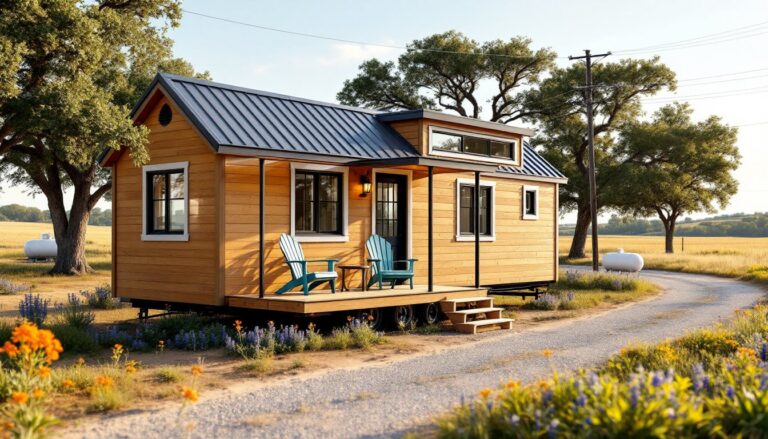
Clean lines and metal roofing define this category. Think standing-seam steel in matte black or charcoal, paired with fiber cement siding like James Hardie in smooth finish. These builds often use Advantech or Zip System sheathing for the continuous air barrier, visible in progress photos as the green or silver skin before siding goes up. Window placement is deliberate, large fixed panes (often 72×48 inches or bigger) on the private side, smaller casement windows for ventilation on road-facing walls.
Modern tiny exteriors skip ornamental trim. Instead, they rely on material transitions: a horizontal cedar accent wall breaking up vertical siding, or a recessed entry with stained concrete pad. Roof overhangs stay minimal, sometimes just 8–12 inches, which works in dry climates but can be a mistake in the Pacific Northwest where rain soaks siding. Images from contemporary home design sources frequently show flat or shed roofs with concealed gutters, beautiful, but they require precise flashing and membrane detailing to avoid leaks. Not a beginner’s first solo project.
Color palettes stick to three tones max: one dominant (white, gray, black), one accent (natural wood, rust), and one trim color. Builders using Sherwin-Williams Duration or Benjamin Moore Aura get good coverage on fiber cement, about 350–400 square feet per gallon for the first coat. Expect to prime if going from dark to light.
Rustic and Farmhouse-Style Tiny Homes
Board-and-batten siding in natural or painted pine gives these homes their signature vertical stripe pattern. Actual dimensions: 1×8 boards with 1×2 or 1×3 battens spaced 12–16 inches on center. The look is forgiving for DIYers because battens hide seams and the layout doesn’t require perfect cuts. Just watch for wood movement, use kiln-dried lumber and leave 1/8-inch gaps at butt joints, or boards will buckle when humidity swings.
Metal roofing remains popular here too, but in warmer tones: weathered red, bronze, or galvanized steel that patinas over time. Gable or gambrel roofs add usable loft space compared to shed styles. Roof pitch matters: 6:12 or steeper sheds snow and looks proportional on small structures, while 4:12 can look squashed. Images often show cupolas or ridge vents, both functional for heat exhaust in lofts.
Exterior details make the style: chunky cedar porch posts (6×6 or larger), metal brackets (real or decorative), and divided-light windows. Farmhouse tiny homes photograph well with cedar shake shingles on gable ends, though those require treatment with a stain like TWP or Ready Seal every 3–5 years depending on UV exposure. Stone or brick skirting hides trailer frames on THOW models, usually a faux veneer like Eldorado Stone since real masonry adds too much weight.
Creative Interior Layouts and Space-Saving Solutions
The best tiny home interiors eliminate single-use furniture. A dining table folds into a wall bracket when not needed, or the tabletop lifts to reveal storage. Murphy beds are standard, but quality hardware matters, look for piston lift kits rated for at least 150 pounds if using a memory foam mattress. Cheap springs fail within a year. Images reveal which hinge placement works: side-mount beds leave floor space open during the day: foot-mount versions (less common) work in narrow builds.
Stairs beat ladders for daily loft access, especially for anyone over 40 or with knee issues. Alternating tread stairs (ship’s ladders) save 30–40 percent of the footprint compared to code-compliant straight runs, though they’re not legal as the sole egress in some jurisdictions. Each tread becomes a drawer, images show pull-out storage for shoes, linens, or pantry goods. Build these from 3/4-inch plywood with full-extension drawer slides rated for 100 pounds. Soft-close slides add $8–12 per pair but prevent slamming.
Built-in seating along walls does double duty. A window bench with a hinged seat hides propane tanks, tools, or seasonal gear. The same concept applies under platform beds in ground-floor bedroom nooks, lifting the mattress platform (usually 3/4-inch MDF or quality plywood on a 2×4 frame) reveals bins on sliders. Examples from international design galleries show European-style platform storage using IKEA Skorva midbeams or similar center supports to prevent sagging.
Vertical space is gold. Ceiling-mounted pot racks, hanging bike hooks, and overhead nets (cargo netting stretched on eye bolts) keep floors clear. Pocket doors save the swing radius of traditional doors, 36 inches saved per door, but require 2×6 wall framing to accommodate the door thickness plus hardware. Barn doors are trendy but don’t seal sound or light: fine for closets, poor for bathrooms.
Tiny Home Kitchen and Bathroom Design Ideas
Tiny kitchens revolve around apartment-size appliances. A 24-inch range (Summit or Avanti brands are common) fits where full 30-inch models won’t. Countertop convection ovens substitute for built-in wall ovens, freeing cabinet space. Refrigerators run 10–12 cubic feet: anything larger dominates the room. Some builders use 12-volt DC compressor fridges (like Dometic) originally designed for RVs, they’re pricier but draw less power if the home is off-grid.
Counter depth is negotiable. Standard residential counters are 24 inches deep, but tiny home kitchens often use 18-inch-deep base cabinets to preserve walkway width. That means custom or semi-custom cabinetry, or modifying stock IKEA Sektion cabinets by trimming the backs. Butcher block countertops (1.5 inches thick) cantilever 10–12 inches to create a breakfast bar without adding a base. Support that overhang with steel brackets rated for the span.
Sinks can’t shrink much, anything under 22 inches long is hard to use. Undermount stainless sinks (18-gauge steel minimum) paired with a pull-down faucet conserve space better than top-mount models with bulky rim edges. Images show single-basin sinks winning out over double bowls: you can soak a sheet pan in one large basin, but two small basins fit nothing.
Bathrooms max out every inch. Corner neo-angle showers (36×36 inches) beat standard 32×32 stalls by opening on an angle, which feels less claustrophobic. Tile these with 2×2-inch mosaics on the floor (more grout lines = better traction) and 4×12 subway tile on walls to minimize cuts. A curbless shower with linear drain saves 4–5 inches of floor space but requires sloping the subfloor, tricky in a THOW where you’re building over a trailer deck.
Toilets: standard-height models with round bowls (not elongated) fit tighter spaces. Composting toilets (Nature’s Head, Separett) eliminate black water tanks in off-grid builds but need daily maintenance. If connecting to a septic system, use a macerating toilet like Saniflo that pumps waste uphill or horizontally, helpful when the bathroom’s far from the main drain. Wall-hung sinks and toilets (like Toto or Duravit) open up floor space for cleaning but require 2×6 blocking inside walls to support the weight.
How to Use Tiny Home Images for Your Own Project
Start by screenshotting or pinning 30–50 images that match the target square footage and layout, loft vs. ground-floor bedroom, galley vs. L-shaped kitchen. Print them. Spread them out. Look for repeated elements: if four different builds use the same window size, that’s probably code-minimum or a stock dimension that’s easy to source. Note wall colors, ceiling treatments, and lighting styles, but focus on the structure underneath. Is the ceiling tongue-and-groove pine or drywall? Are walls shiplap (which adds thickness) or just painted plywood with trim?
Measure existing furniture against images. If a homeowner plans to keep a specific couch or desk, find photos with similar pieces and see how they fit proportionally. A 78-inch sofa will overwhelm a 16-foot-long living area, images make that obvious. Use a scale ruler on floor plans (if published alongside photos) to verify that the “spacious” kitchen is actually 6 feet wide, not 8.
Create a material takeoff from images. Count the number of cabinet doors, drawer fronts, light fixtures, and outlet covers visible. This builds a rough shopping list. For finishes, zoom in on photos to see plank width (5-inch vs. 8-inch shiplap looks very different), grout line width (1/8-inch vs. 1/4-inch), and hardware finish (brushed nickel vs. oil-rubbed bronze). Ordering samples before committing prevents costly mismatches.
Finally, use images to communicate with contractors or permitting offices. A picture of the desired roof pitch, porch railing, or window layout clarifies intent faster than verbal descriptions. Just remember: what works in Nevada’s dry climate might fail in Florida’s hurricanes. Always check local codes and adapt accordingly. And if something in an image looks too clean or too perfect, it might be a render, not a real build, reverse image search to verify before basing plans on it.