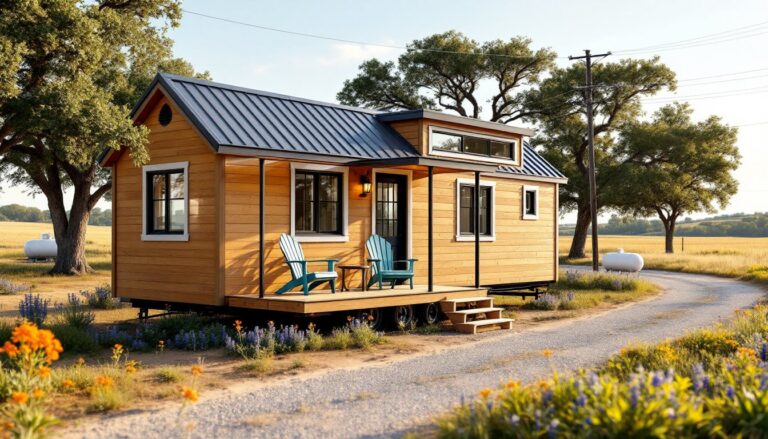
Ohio’s tiny home movement is gaining serious traction, and it’s not just about trendy Instagram feeds. Real communities are sprouting up across the state, offering affordable housing alternatives, simplified living, and a chance to escape the typical mortgage grind. Whether someone’s downsizing after retirement, seeking financial freedom, or just tired of maintaining a 2,500-square-foot house they barely use, tiny home communities provide infrastructure, neighbors, and, most importantly, legal places to park a dwelling that’s often under 400 square feet. This guide walks through what’s actually available in Ohio, what the zoning reality looks like, and what it costs to make the move.
Table of Contents
ToggleKey Takeaways
- Tiny home communities in Ohio operate under land-lease, co-housing, or developer-owned models, with each structure affecting resale value, fees, and long-term stability differently.
- Ohio’s zoning laws vary by municipality, but IRC Appendix Q standards and PUD zoning provide the clearest pathway for permanent tiny home living on foundations.
- Monthly costs for tiny home community living typically range from $400–$750, including land lease ($250–$500), utilities ($100–$200), and HOA fees, plus the initial investment in the home itself.
- Verified utilities, year-round road access, storage options, and reliable internet connectivity are non-negotiable amenities that distinguish legitimate communities from informal clusters operating in legal gray areas.
- Visiting communities multiple times, reviewing bylaws and permits, and understanding the exit strategy for resale or relocation are critical steps before committing to a tiny home lifestyle in Ohio.
What Are Tiny Home Communities and Why Ohio?
A tiny home community is a residential development where multiple tiny houses, typically 100 to 400 square feet, share common land, utilities, and amenities. These aren’t RV parks or campgrounds, though the line sometimes blurs. Most operate under planned unit development (PUD) zoning or special-use permits that allow permanent tiny house living.
Ohio offers a few advantages for tiny home enthusiasts. First, land costs less than coastal markets, making community development financially feasible. Second, the state’s building codes don’t outright ban tiny homes, though local ordinances vary widely. Third, Ohio’s four-season climate means communities here need real infrastructure, septic or sewer hookups, insulated utilities, and year-round road access, which filters out fly-by-night operations.
Tiny home communities typically fall into three categories: land-lease communities (residents own their home, lease the land), co-housing models (shared ownership of common areas), and private developments (developer-owned land with rental or purchase options). Each has different cost structures, bylaws, and long-term investment implications. Anyone considering this lifestyle needs to understand which model they’re entering, because it affects everything from resale value to monthly fees.
Top Tiny Home Communities in Ohio
Ohio’s tiny home community landscape is still developing, but several established and emerging options exist as of 2026.
Tiny Estates in Elizabethtown (southern Ohio) was one of the state’s first dedicated tiny home communities. It operates as a land-lease model with individual lots ranging from 0.1 to 0.25 acres. Residents own their homes, which must meet IRC Appendix Q standards (minimum 150 square feet of habitable space, ceiling height of 6’8″ in lofts). Monthly land lease runs $300-$400, plus utilities.
Lemon Tree Village near Wilmington offers a co-housing approach with shared gardens, workshop space, and a community building. Lots accommodate homes up to 500 square feet. The community requires participation in monthly work days, expect to maintain common areas, not just your own plot.
Heartland Tiny Homes Community in the Dayton area focuses on modern prefab homes with contemporary design standards. This is a developer-owned community with purchase options starting around $75,000 for land and a basic shell. Homes must be professionally built or certified by NOAH (National Organization of Alternative Housing).
Several informal tiny home clusters exist in rural counties, particularly in Hocking Hills and Amish Country, but these often operate in legal gray areas. If a community doesn’t openly advertise its zoning status or provide documentation of permits, that’s a red flag. Ohio townships can and do issue cease-and-desist orders for unpermitted dwellings.
Prospective residents should visit in person, request copies of the master site plan, and verify utility hookups. A community with vague answers about septic systems or electrical service likely doesn’t have proper approvals.
Zoning Laws and Regulations for Tiny Homes in Ohio
Ohio’s zoning reality for tiny homes is fragmented. The state building code doesn’t prohibit tiny houses, but it also doesn’t provide a clear pathway. Interpretation falls to local building departments, and their responses range from enthusiastic to hostile.
IRC Appendix Q is the key reference. Adopted by some (not all) Ohio jurisdictions, it sets minimum standards for tiny houses used as permanent dwellings: 120 square feet minimum (not including lofts), 6’8″ ceiling height in lofts, emergency escape windows, and compliance with standard plumbing and electrical codes. Homes built to Appendix Q can sometimes qualify for residential zoning.
Minimum square footage requirements remain the biggest barrier. Many Ohio municipalities have minimum dwelling size ordinances, 500, 600, even 800 square feet, that effectively ban tiny homes in single-family residential zones. That’s why communities cluster in unincorporated townships or areas with PUD zoning, which allows more flexibility.
RVIA certification (Recreational Vehicle Industry Association) is another route. If a tiny home is built on a trailer and RVIA-certified, it’s legally a travel trailer. Some communities allow these in RV park zoning, but most limit stays to 180 days per year. That’s fine for seasonal use, not permanent living.
Utilities and septic are non-negotiable. Ohio law requires dwellings to connect to approved water and wastewater systems. Off-grid composting toilets and rainwater collection may work in unincorporated areas, but most counties require at minimum a septic permit or sewer hookup. Electrical must meet NEC standards, no extension cords running from a neighbor’s barn.
Before joining any community, residents should request a copy of the special-use permit or PUD approval and confirm it allows permanent occupancy. Weekend getaway zoning won’t cut it for full-time living, and switching later often requires expensive rezoning battles.
Cost Breakdown: What to Expect When Joining a Tiny Home Community
Tiny home living isn’t always as cheap as social media makes it look. Here’s a realistic breakdown for Ohio communities in 2026.
Land lease or lot purchase: Monthly land lease fees run $250-$500, depending on amenities and location. Some communities offer lot purchase options ($15,000-$40,000), which provides more long-term stability but requires upfront capital.
The tiny home itself: A DIY build on a trailer starts around $20,000-$30,000 for materials if someone does most of the work themselves. Professional builders charge $50,000-$100,000+ for turnkey models. Factory-built tiny homes certified to NOAH or RVIA standards fall in the $45,000-$80,000 range. Financing is tricky, most traditional mortgages don’t apply to structures under 400 square feet. RV loans, personal loans, or cash are typical routes.
Utility hookups and infrastructure: Budget $3,000-$8,000 for electric service installation, water line connection, and septic or sewer tap fees. Some communities include this in lot fees: others bill separately. Propane tanks for heating and cooking run $800-$1,500 installed, plus seasonal refills.
Ongoing monthly costs: Expect $100-$200 for utilities (electric, water, trash), $50-$150 for propane (winter months higher), and $200-$400 for land lease or HOA fees. Total monthly outlay often lands between $400-$750, not including the cost of the home itself.
Insurance: Tiny homes on wheels require RV insurance ($600-$1,200/year). Permanent tiny homes on foundations may qualify for standard homeowners insurance, but many carriers don’t offer policies for dwellings under 500 square feet. Specialty insurers exist, but premiums run higher, expect $800-$1,500 annually.
Hidden costs: Site prep (grading, gravel pad, tie-downs) can add $2,000-$5,000. Community rules may require skirting, landscaping, or exterior finishes that weren’t in the original budget. Always pad estimates by 15-20% for the unexpected.
Essential Amenities and Features to Look For
Not all tiny home communities offer the same infrastructure. Here’s what matters for long-term livability.
Utility access: Verify individual electric meters (avoid shared service, it complicates usage and billing), municipal water or tested well water with pressure tanks, and either septic systems with documented percolation tests or sewer hookups. Communities relying on composting toilets and greywater systems can work, but Ohio counties often require backup septic permits.
Road access and parking: Year-round gravel or paved roads are essential. Muddy two-tracks become impassable in Ohio winters. Each lot should have designated parking for at least one vehicle: shared parking creates friction.
Storage: Most people underestimate how much stuff they still own after downsizing. Look for communities offering shared storage sheds, workshop space, or allowances for small accessory structures on individual lots.
Community buildings: Shared laundry, workshop areas, and gathering spaces reduce the need to cram everything into 300 square feet. Some communities incorporate concepts from small space design, maximizing functionality in shared areas so individual homes can remain truly minimal.
Internet and cell service: Remote work requires reliable connectivity. Many rural Ohio properties have spotty cell coverage and no broadband. Ask current residents about their actual download speeds, not what the community’s marketing materials claim.
Pet policies and guest rules: Some communities restrict pet size or number. Others limit overnight guests or require approval for stays longer than a few days. Read bylaws carefully, these rules affect daily life more than people expect.
Proximity to services: A rural tiny home community 40 miles from the nearest grocery store sounds idyllic until someone’s driving that loop three times a week. Consider distance to medical care, work, and basic shopping.
How to Choose the Right Tiny Home Community for Your Lifestyle
Choosing a tiny home community isn’t just about square footage and monthly fees. The social dynamics and long-term viability matter just as much.
Visit multiple times, different days: Tour on a weekday afternoon and a Saturday morning. Talk to residents when management isn’t hovering. Ask about turnover rates, if half the lots are empty or constantly cycling, something’s wrong.
Review governing documents: Request the community’s bylaws, covenants, and any architectural guidelines. Some communities dictate exterior colors, roofing materials, or even landscaping choices. Others operate more loosely. Know which style fits before committing.
Assess financial stability: Ask how many occupied lots currently exist versus total planned lots. Underdeveloped communities may struggle to maintain common infrastructure. Request a copy of the annual budget or fee structure. A well-run community should provide this transparently.
Understand the exit strategy: If a resident needs to sell or relocate, what’s the process? Land-lease communities sometimes limit who can buy a home or charge transfer fees. Co-housing models may require approval from other members. Developers might retain first-right-of-refusal. Clarify this upfront.
Match community culture to personal needs: Some tiny home communities lean heavily into communal living, shared meals, work days, consensus decision-making. Others function more like traditional subdivisions where neighbors wave but mostly keep to themselves. Publications like Curbed often cover the social dynamics of alternative housing, and those lessons apply here. Introverts may struggle in high-engagement communities: people seeking connection may feel isolated in hands-off setups.
Check local services and code enforcement: Visit the township or county building department. Ask if the community has all required permits and whether any violations or complaints exist on record. Public records requests are free in Ohio and can reveal issues the developer won’t mention.
Consider resale and appreciation: Tiny homes generally don’t appreciate like traditional real estate. Plan to live in it for several years, not flip it for profit. If equity matters, prioritize communities allowing lot purchase over long-term land lease.
Conclusion
Tiny home communities in Ohio offer a viable alternative to conventional housing, but they’re not a shortcut to effortless living. Success depends on understanding zoning realities, budgeting for real costs (not just the Instagram-friendly ones), and choosing a community that aligns with long-term goals and social preferences. Do the assignments upfront, visit in person, read the bylaws, verify permits, and the downsized life can deliver on its promises.