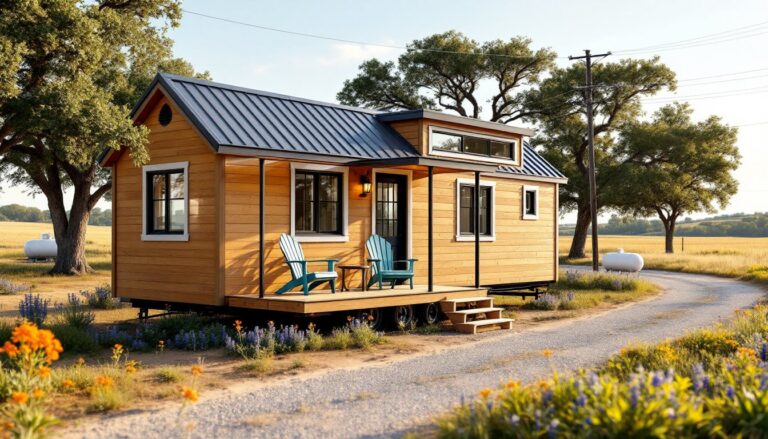
Tiny home parks have shifted from fringe curiosity to a mainstream housing option for people looking to downsize without sacrificing community or amenities. Unlike a standalone tiny house parked in someone’s backyard, a tiny home park offers dedicated infrastructure, legal protection, and neighbors who’ve made the same lifestyle choice. Whether someone’s looking to escape a mortgage, simplify their footprint, or join a walkable, intentional community, tiny home parks deliver a practical framework that addresses zoning, utilities, and permanence, things that often trip up solo tiny home owners.
Table of Contents
ToggleKey Takeaways
- A tiny home park offers legal protection, dedicated infrastructure, and intentional community that addresses zoning and utilities challenges standalone tiny home owners often face.
- Tiny home parks dramatically reduce homeownership costs with purchase prices between $30,000–$150,000 and monthly lot fees of $300–$800, including land rent and utilities.
- Monthly lot fees in a tiny home park typically cost less than studio apartments in most metro areas, while property taxes remain minimal since residents lease rather than own land.
- Shared amenities, built-in walkable layouts, and cross-generational networks in tiny home parks foster intentional community and aging-in-place options without forced participation.
- Before joining a tiny home park, verify zoning compliance, meter-specific utilities, lease terms, infrastructure quality, and current resident satisfaction to avoid legal or financial pitfalls.
- Design your tiny home for park living with 50-amp electrical service, ductless mini-split climate control, low-maintenance exterior materials, and multi-function interior layouts that maximize efficiency.
What Is a Tiny Home Park and How Does It Work?
A tiny home park is a purpose-built community designed to accommodate small dwellings, typically under 400 square feet. These parks function similarly to RV parks or mobile home communities but are zoned and engineered specifically for tiny houses on wheels (THOWs) or on permanent foundations. Each lot includes hookups for water, electric, and sewer, plus access to shared amenities like laundry facilities, dog parks, or community gardens.
Unlike traditional housing developments, tiny home parks often involve lot lease agreements rather than land ownership. Residents own their tiny home but pay monthly rent for the land and utilities. Some parks operate as cooperatives or homeowner associations, where residents have a say in maintenance, rules, and long-term development.
Legally, tiny home parks navigate complex zoning and building codes. Many municipalities classify THOWs as recreational vehicles, which limits where they can be parked permanently. A properly permitted tiny home park solves this by securing rezoning or conditional use permits, ensuring residents aren’t evicted due to code violations. Some parks, like The Oaks in Florida, offer tiny homes starting around $100,000, combining affordability with legal compliance.
Parks may require homes to meet NOAH (National Organization of Alternative Housing) or RVIA (Recreational Vehicle Industry Association) certification, depending on whether the tiny home is a permanent ADU (accessory dwelling unit) or a mobile unit. These certifications ensure structural safety, electrical compliance with NEC standards, and proper trailer construction for towable units.
Benefits of Living in a Tiny Home Park
Lower Cost of Living and Homeownership
Tiny home parks slash the two biggest homeownership expenses: purchase price and ongoing costs. A typical tiny home ranges from $30,000 to $150,000, depending on whether it’s DIY, builder-finished, or custom-designed. Compare that to the median U.S. home price hovering above $400,000, and the math is straightforward.
Monthly lot fees typically run $300 to $800, covering land rent, water, sewer, trash, and sometimes electric or internet. That’s often less than a studio apartment in most metro areas. Property taxes are minimal or nonexistent since residents don’t own the land. Maintenance costs stay low due to smaller square footage, less roof to replace, fewer windows to seal, and compact HVAC systems that cost a fraction of whole-home units.
For people priced out of traditional homeownership or carrying student debt, tiny home parks offer a route to equity without a 30-year mortgage. Some residents pay cash upfront, eliminating debt entirely.
Built-In Community and Shared Amenities
Tiny home parks foster intentional community in ways subdivision suburbs rarely do. Shared outdoor spaces, fire pits, picnic areas, or workshop sheds, encourage interaction. Many parks host monthly potlucks, tool-sharing libraries, or skill-swap events where residents teach carpentry, canning, or solar maintenance.
Amenities vary widely. Higher-end parks might include fitness centers, coworking spaces, or guest casitas for visitors. Budget-friendly parks focus on essentials: laundry rooms, mail kiosks, and gravel pads. Either way, the setup mirrors the co-housing movement, where privacy and community coexist without forced participation.
For retirees, tiny home parks offer aging-in-place options with walkable layouts and single-story living. For remote workers, small-space design strategies help maximize efficiency in homes that double as offices. The demographic mix, young professionals, empty nesters, van-lifers transitioning to stationary life, creates cross-generational networks that feel less transactional than typical neighborhoods.
How to Find and Choose the Right Tiny Home Park
Start with online directories like Tiny House Community (tinyhouses.com) or the Tiny Home Industry Association’s park database. These list certified parks, contact info, and wait-list status. Facebook groups and Reddit forums (r/TinyHouses) provide unfiltered resident reviews.
When evaluating a park, ask these questions:
- Zoning and permits: Is the park legally compliant? Request copies of the conditional use permit or variance. Some “parks” operate in legal gray areas and face shutdown risk.
- Utilities: Are hookups individually metered? Shared electric can inflate costs if neighbors run high-draw appliances. Check if 30-amp or 50-amp service is standard, most tiny homes with full kitchens need 50-amp.
- Lease terms: What’s the initial lease length, renewal process, and rent escalation clause? Month-to-month offers flexibility but less rent stability.
- Rules and restrictions: Are there design guidelines (exterior color, roofing material)? Pet policies? Guest parking limits? Some parks mandate solar panels or composting toilets: others ban them.
- Infrastructure quality: Visit in person. Walk the pads, are they gravel, concrete, or pavers? Gravel is cheaper but turns to mud in wet climates. Inspect communal areas for maintenance quality. Overgrown landscaping or broken lighting suggests management issues.
Location matters. A park 90 minutes from the nearest grocery store might offer cheap rent and quiet rural living but requires reliable transportation. Urban or suburban parks cost more but provide walkability and job access.
Talk to current residents. Ask about management responsiveness, noise levels, turnover rate, and hidden fees. High turnover often signals dissatisfaction.
Costs and Fees: What to Expect When Joining a Tiny Home Park
Upfront costs typically include:
- Application and background check fee: $50 to $150. Parks screen for credit, criminal history, and references.
- Deposit: Usually one month’s lot rent, refundable if the lease ends without damages.
- Hookup or connection fees: $200 to $1,000 for electric, water, and sewer tap-ins. Some parks roll this into the lease: others charge separately.
- Move-in or transport fee: If hiring professionals to tow a THOW, expect $1.50 to $3 per mile. A 200-mile move costs $300 to $600. Wider homes (over 8.5 feet) may require pilot cars and permits.
Recurring monthly expenses:
- Lot rent: $300 to $800 depending on region and amenities. West Coast and resort-area parks charge more.
- Utilities: Metered electric runs $40 to $120/month for a tiny home with mini-split HVAC and standard appliances. Water/sewer is often bundled into lot rent but may be metered separately.
- HOA or co-op fees: $25 to $100/month for parks with elected boards managing shared spaces and road maintenance.
- Insurance: Tiny home insurance (often under RV or specialized tiny home policies) costs $600 to $1,200 annually, or roughly $50 to $100/month.
Some parks include trash, internet, and cable in the lot rent. Others bill separately or require residents to contract their own services.
Budget for unexpected costs: replacing a trailer tire ($150 each), re-leveling the home after settling ($200 to $400), or upgrading a water heater ($300 to $800 for a tankless model). Setting aside $100/month for maintenance is prudent.
Be wary of parks advertising “all-inclusive” rent without itemizing what’s covered. Hidden costs, parking fees for a second vehicle, guest fees, or late-payment penalties, can add up.
Designing and Customizing Your Tiny Home for Park Living
Designing for a tiny home park differs from off-grid or mobile builds. Permanent hookups mean fewer compromises on appliances and systems. A tiny home in a park can support a full-size refrigerator, stackable washer/dryer, and electric range without the battery banks or propane juggling required for off-grid setups.
Electrical planning: Most parks provide 50-amp service. Wire the home with a main breaker panel rated for continuous draw. Include dedicated 20-amp circuits for kitchen appliances and a mini-split heat pump. If the park only offers 30-amp, avoid simultaneous high-draw use (don’t run the oven and space heater at once).
Plumbing: Use PEX tubing (not CPVC) for supply lines, it’s flexible, freeze-resistant, and DIY-friendly. Install a pressure regulator at the water hookup to prevent burst hoses from park pressure spikes (some systems exceed 80 psi). A standard RV-style sewer connection works, but hard-plumb it with ABS or PVC if the home won’t move. Use a backflow preventer on the water line: some parks require it by code.
Foundation and anchoring: Even if the tiny home sits on a trailer, stabilize it with adjustable pier jacks or concrete blocks at each corner and midpoint. This prevents rocking and frame stress. Some parks require tie-downs or hurricane straps in high-wind zones, check local IRC requirements.
Exterior materials: Choose low-maintenance siding. LP SmartSide or Hardie board outlasts T1-11 and resists rot in humid climates. Metal roofing (standing seam or corrugated) handles sun and rain better than asphalt shingles and weighs less, important for THOWs.
Interior layout: Prioritize multi-function furniture. A Murphy bed frees floor space during the day. Fold-down desks and wall-mounted tables adapt rooms for work, dining, or hobbies. Use pocket doors instead of swinging doors to save square footage.
Storage: Install overhead cabinets to the ceiling, wasted vertical space is a rookie mistake. Under-stair drawers, built-in benches with lift-up seats, and magnetic knife strips free up counter area.
Climate control: A ductless mini-split is the gold standard for tiny homes. Units rated 9,000 to 12,000 BTU heat and cool efficiently in well-insulated spaces under 400 square feet. Supplement with a ceiling fan for air circulation.
Soundproofing: Thin walls and close neighbors mean noise travels. Add Rockwool insulation (better sound dampening than fiberglass) in walls and floors. Use solid-core interior doors and weatherstripping around exterior doors.
Safety: Install smoke and carbon monoxide detectors on separate circuits (not solely battery-powered). Keep a fire extinguisher rated for kitchen and electrical fires within arm’s reach of the stove. Egress windows must meet IRC minimums: 5.7 square feet of opening, 24-inch height, 20-inch width.
Most parks have design review boards. Submit exterior renderings and material samples before starting construction. Some parks encourage creative expression: others enforce uniformity. Know the rules before ordering custom windows or painting the exterior chartreuse.
Final thought: Tiny home park living trades square footage for financial freedom and built-in community. Success comes from realistic expectations, thorough park research, and thoughtful design that fits the lifestyle, not from chasing a minimalist aesthetic that doesn’t match daily habits. Done right, it’s a practical path to homeownership that doesn’t require a six-figure salary or decades of debt.