Veterans returning from service often dream of homeownership without the burden of a massive mortgage. Tiny homes, typically under 400 square feet, offer an appealing solution: lower costs, minimal maintenance, and simplified living. But here’s the catch: securing a VA loan for a tiny home isn’t as straightforward as financing a conventional house. The VA’s loan guarantee program, designed to help service members purchase real property, has specific requirements that many tiny homes don’t meet right out of the box. This guide breaks down what veterans need to know about using VA benefits for tiny home purchases, including foundation requirements, property standards, and viable alternatives when a VA loan isn’t an option.
Table of Contents
ToggleKey Takeaways
- VA loans can finance tiny homes built on permanent foundations that meet VA Minimum Property Requirements, but trailer-based or unconventionally constructed tiny homes won’t qualify.
- VA loan approval for tiny homes requires code-compliant permanent foundations, minimum square footage flexibility (though many lenders impose 350-600 sq ft thresholds), and code-compliant egress systems with stairs rather than ladders.
- Most lenders avoid financing VA loan tiny homes under 400 square feet due to scarce comparable sales data, making appraisals difficult and loans harder to approve.
- Veterans should consult VA-approved lenders and experienced builders early in the process to ensure the tiny home meets foundation requirements, local zoning codes, and VA standards before construction or purchase.
- When VA loans aren’t feasible, alternatives include personal loans (6-12% rates for trailer-mounted homes), RV loans, chattel loans, or cash purchases starting at $30,000-$80,000 for many tiny home models.
What Is a VA Loan and Can It Be Used for a Tiny Home?
A VA loan is a mortgage benefit guaranteed by the U.S. Department of Veterans Affairs, available to eligible veterans, active-duty service members, and surviving spouses. Unlike conventional loans, VA loans require no down payment and don’t carry private mortgage insurance (PMI), making them one of the most cost-effective paths to homeownership.
But, the VA loan program was designed for permanent, real property, not personal property. This distinction is critical when it comes to tiny homes. The VA will only guarantee loans for dwellings that meet specific criteria: the structure must be permanently affixed to land the borrower owns or leases long-term, and it must comply with local building codes and the VA’s Minimum Property Requirements (MPRs).
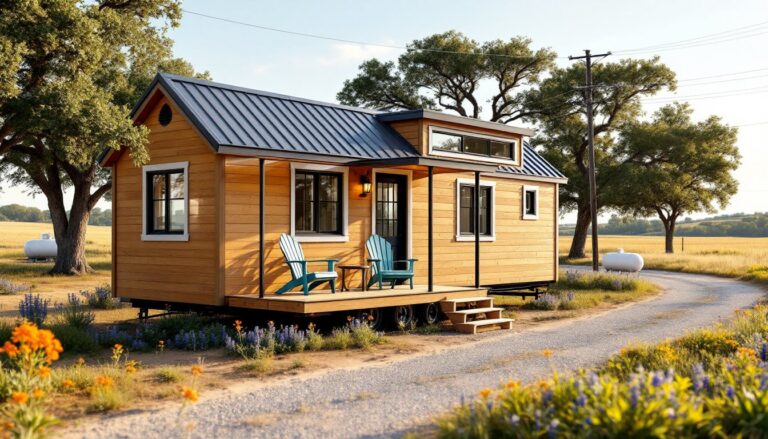
Most tiny homes fall into one of two categories: those built on permanent foundations and those on trailers. Trailer-mounted tiny homes are classified as personal property (like RVs or mobile homes without permanent foundations), and the VA won’t guarantee loans for them. Foundation-based tiny homes, on the other hand, may qualify, but only if they meet size, safety, and permanence standards.
The short answer: yes, a VA loan can be used for a tiny home, but the home must be built on a permanent foundation, meet minimum square footage requirements, and pass VA appraisal standards. If the tiny home is on wheels or lacks a foundation, veterans will need to explore alternative financing.
VA Loan Requirements for Tiny Homes
Foundation and Permanence Requirements
The VA requires that any financed property be permanently affixed to real estate. This means the tiny home must sit on a foundation that complies with local building codes, typically a concrete slab, crawl space, or full basement. Pier-and-beam foundations can work if they meet code, but skids or trailer chassis won’t cut it.
The home must also be anchored to the foundation using methods approved by the International Residential Code (IRC) or local jurisdiction. This usually involves anchor bolts, straps, or welds that prevent the structure from being relocated. If the home can be hitched to a truck and towed away, it’s personal property, not real property, and the VA won’t guarantee the loan.
Veterans must either own the land outright or hold a long-term lease (typically 99 years or more). The VA doesn’t finance land purchases separately, so if a veteran doesn’t already own a lot, they’ll need to buy land and the tiny home together in a single transaction, or pursue a construction loan that converts to a VA mortgage after the home is completed.
Permits are non-negotiable. The tiny home must pass local inspections for electrical, plumbing, and structural work. Many rural counties have more lenient codes for small dwellings, but urban and suburban areas often enforce minimum square footage rules that can disqualify tiny homes from VA financing.
Minimum Property Standards for Tiny Homes
The VA’s Minimum Property Requirements (MPRs) ensure that financed homes are safe, sanitary, and structurally sound. For tiny homes, these standards can be a sticking point.
First, there’s no official minimum square footage in VA guidelines, but lenders and appraisers often impose their own. Many won’t approve loans for homes under 400 square feet because comparable sales data is sparse, making appraisals difficult. Without comps, the appraiser can’t establish fair market value, and the loan won’t be approved.
The home must have a permanent heating system capable of maintaining livable temperatures, a functional kitchen with a sink, stove, and refrigerator, and a bathroom with a toilet, sink, and bathing facility. Composting toilets and tankless water heaters are acceptable if they meet code, but off-grid systems (like rainwater collection without backup municipal water) may raise red flags during appraisal.
Roof, foundation, and structural elements must be sound. The VA appraiser will flag issues like improper framing, lack of insulation, or substandard materials. Tiny homes built with reclaimed or unconventional materials may not pass unless they meet code and provide adequate durability.
Finally, the property must have safe access and egress. This means code-compliant stairs (not ladders) to lofted sleeping areas, and egress windows in bedrooms. Many tiny home designs use ladder access to lofts, this won’t meet VA standards if the loft is classified as a bedroom.
How to Qualify Your Tiny Home for VA Loan Approval
Getting a tiny home approved for a VA loan requires planning before construction or purchase. Veterans should start by confirming local zoning and building codes. Some jurisdictions classify tiny homes as accessory dwelling units (ADUs), which may have relaxed requirements, while others enforce strict minimum square footage rules that can exceed 600 square feet.
Next, work with a builder experienced in code-compliant construction. The home must be built to IRC standards (or local amendments), with proper permits pulled at each stage: foundation, framing, electrical, plumbing, and final inspection. Many prefab tiny home manufacturers now offer models designed to meet VA requirements, including modern prefab options that emphasize code compliance and permanent foundations.
Before beginning construction, veterans should consult a VA-approved lender. Not all lenders are willing to finance tiny homes, even if they meet VA standards. Some specialize in non-traditional properties and can guide borrowers through appraisal challenges. Lenders will also clarify whether the property size and value meet their internal underwriting criteria.
The appraisal is the final hurdle. The VA appraiser will inspect the home to ensure it meets MPRs and will search for comparable sales within the area. In regions with a growing tiny home market, comps may exist: in others, the appraiser may struggle to justify the loan amount. Veterans can improve their odds by choosing a slightly larger home (350-600 square feet) that still qualifies as “tiny” but offers more appraisal flexibility.
If the home is a new build, veterans can use a VA construction loan, which funds the build in stages and converts to a standard VA mortgage once construction is complete and the certificate of occupancy is issued. This route requires detailed plans, a licensed contractor, and close coordination with the lender.
Alternative Financing Options for Veterans Purchasing Tiny Homes
When a VA loan isn’t feasible, due to lack of foundation, insufficient square footage, or appraisal issues, veterans still have options.
Personal loans are a common alternative for trailer-mounted tiny homes. Since these homes are classified as personal property, they’re financed like vehicles or RVs. Interest rates are higher (typically 6-12% as of 2026) and terms are shorter (7-15 years), but approval is faster and doesn’t require land ownership. Veterans with strong credit can secure competitive rates through credit unions or online lenders.
RV loans work for certified tiny homes on wheels that meet RVIA (Recreational Vehicle Industry Association) standards. These loans have lower rates than unsecured personal loans but still exceed VA loan rates. Veterans should verify whether their tiny home qualifies as an RV: many custom builds don’t meet RVIA criteria.
Some veterans explore FHA vs USDA loans as alternatives, though both programs have similar foundation and square footage requirements to VA loans. USDA loans, in particular, require rural locations and can work for tiny homes on larger rural parcels.
Chattel loans finance manufactured or mobile homes not permanently affixed to land. If a tiny home is built to HUD standards (like a manufactured home), a chattel loan may apply. Rates are higher than VA loans but lower than personal loans, and terms can extend to 20 years.
Finally, cash purchase remains the simplest route. Many tiny homes cost $30,000-$80,000, making them accessible for veterans who can save or use proceeds from selling a previous home. Cash buyers avoid appraisal challenges, interest costs, and loan restrictions entirely. Veterans can use resources like cost estimators from HomeAdvisor to budget for site prep, utilities, and foundation work if building from scratch.
For veterans interested in broader housing trends and tiny home design, publications covering real estate and architecture news offer insights into zoning changes and the growing acceptance of tiny homes in urban and suburban areas.
Conclusion
VA loans offer veterans an unbeatable benefit, zero down payment, no PMI, and competitive rates, but they’re designed for traditional real property. Tiny homes on permanent foundations that meet VA Minimum Property Requirements can qualify, but trailer-based or unconventionally built tiny homes won’t. Veterans should verify local codes, work with experienced builders, and consult VA-approved lenders early in the process. When VA financing isn’t an option, personal loans, RV loans, and cash purchases provide viable paths to tiny home ownership.